


Welcome one and all. Last month we spoke about recycling and before that price, but we're yet to discuss a specific application. We've touched batteries a bit, and that is a real and growing market. But one area I've seen much less coverage on is wires. Yes, wires.
TLDR
CNT wires challenge copper's dominance: 80% lighter, 5-10x stronger, superior thermal conductivity, zero metal fatigue, and non-corrosive with stable conductivity across temperatures. Commercial products deliver 13-18% of copper's electrical conductivity, but development programs have reached 61%.
Aerospace applications are viable today but can't scale: Launch costs of $5,000-$50,000 per pound justify premium pricing, but volumes of 500-1,000 metric tons by 2030 are too small to drive material cost reductions through economies of scale.
The automotive mass market remains a decade away: A $3 per pound threshold requires material costs dropping to $20-30 per kilogram, still 2-3x copper pricing. Current economics only work for niche durability applications like door wiring.
Data centers are the breakthrough wildcard: AI pushed rack densities from 10kW to 100-300kW, creating thermal crises. CNT wires offer 17% better thermal conductivity than copper, but currently generate 7.7x more resistive heat. If researchers can reach 80-100% of copper's electrical conductivity by 2028-2030, data centers could absorb thousands of metric tons annually and drive 30-50% cost reductions that open up broader markets.
What Are Wires Anyway?
A wire is a long, thin piece of metal that acts as a path for electricity to move through. Most metals like copper or aluminum have lots of loose electrons that can move easily. When you connect a wire to a battery or power source, the voltage makes those electrons drift along the wire. That drifting movement is electric current.
You want something where electrons are held very weakly. Copper is the gold standard — cheap, easy to shape, and its electrons flow without much fuss. The absolute best electrical conductor at room temperature is actually silver at approximately 63 MS/m, slightly better than copper's 59 MS/m. Gold comes in third at around 45 MS/m. And because you're reading CNT Dispatch: carbon nanotubes make excellent wires.
i. Do Nanotubes Make Good Wires?
By 2021, pure "neat" carbon nanotube fibers hit electrical conductivity of approximately 10.9 MS/m (roughly 18% of copper's conductivity or 30% of aluminum's performance). But what they do deliver alongside that conductivity is 2-5 GPa tensile strength — roughly 5 to 15 times stronger than copper or aluminum.
Development projects have pushed further. TE Connectivity achieved conductivity approaching 61% of copper's conductivity in 2016-2017 through optimization of nanotube length, alignment, and purity. However, TE discontinued the program despite demonstrating viable production capability at 156 million feet annually. Nearly a decade later, no one has commercialized what they proved possible. TE proved the technology works at scale and proved costs could drop 85% over four years. But they shifted their business strategy away from CNT wire innovation. This matters because it shows the barrier to commercialization isn't technical or even financial. Established wire manufacturers probably won't drive CNT adoption, no matter how good the technology gets, as it impacts their core business. We need different players without copper businesses.
CNT fiber is dramatically lighter than copper (roughly 1.3-1.5 g/cm³ vs copper's 8.96 g/cm³), giving it slightly better specific conductivity per unit mass. CNT fiber achieves 7.8 MS·m per g/cm³ compared to copper's 6.6. However, aluminum delivers 13.7 MS·m per g/cm³, beating both materials for pure weight-to-conductivity optimization. This is why aluminum dominates weight-sensitive electrical applications like power transmission lines.
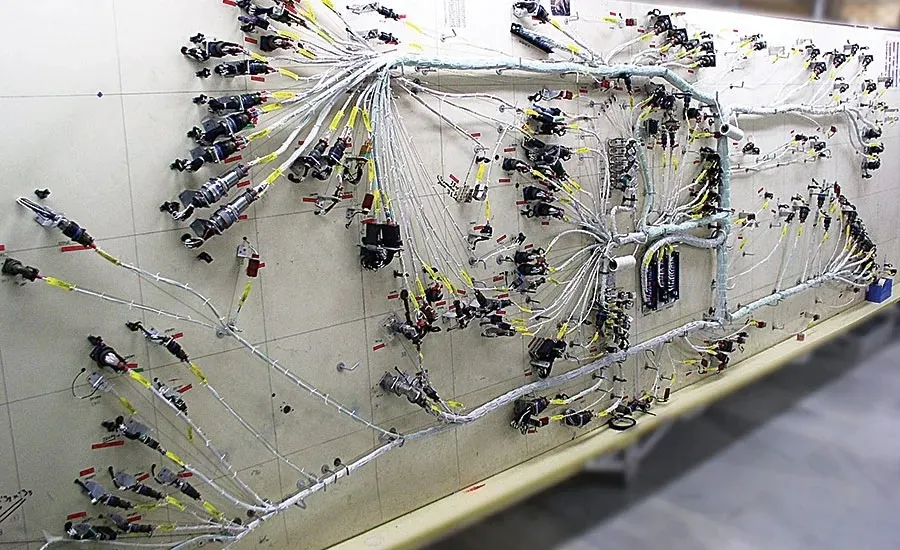
The real value prop comes from mechanical properties. CNT wires are 5-15x stronger than metals, don't undergo metal fatigue, and can flex millions of times without degradation. A door can open a million times without wiring failing. Maintenance teams can pull themselves up on CNT wire harnesses in fighter jets without causing eventual failure.
ii. How Are We Improving CNT Wires?
Why aren't CNT wires at copper levels yet? Five reasons: tube-to-tube junctions that add resistance, misalignment that forces current to zigzag, residual catalyst and impurities that scatter electrons, the fact that CNT wires are an assembly of both highly-conducting and semi-conducting types so the wire has averaged properties, and finally defects or short tubes that create dead ends for current flow.
Commercially available neat CNT fibers reach only 10-11 MS/m (18% of copper). Development-grade materials achieving 35 MS/m (61% of copper) command substantial premiums. Even the best CNT fibers fall short of aluminum's 37 MS/m despite two decades of research.
The gap between commodity products at 13%, commercial fibers at 18%, and development programs at 61% comes down to how much you're willing to pay to fix the five fundamental problems. The question becomes: which applications can justify paying for performance improvements?
iii. Where Do CNT Wires Make Sense?
Aerospace: Premium Pricing, Limited Volume
The aerospace economics work at current pricing. It costs between $3,000-$4,000 per pound to put mass into orbit on the SpaceX Falcon 9. A Boeing 767 tanker could shed 2,000 pounds by replacing copper wiring with CNT alternatives, creating $10-30 million in value that dwarfs material costs even at 35-45 times copper prices. Wire harnesses in fighter jets experience extreme stress from maintenance personnel using them as handholds during repairs, eventually causing metal fatigue failures that ground aircraft. CNT wires could withstand this abuse indefinitely while delivering 70% weight savings.
The challenge with aerospace is volume. Total global satellite production might require 100-200 metric tons of CNT wire annually even with aggressive adoption. Add military aerospace and commercial aviation, and you might reach 500-1,000 metric tons annually by 2030. These volumes can't drive the manufacturing learning curves needed to reduce costs dramatically.
Automotive: The $3 Per Pound Ceiling
Automotive manufacturers will only accept weight-saving materials costing no more than $3 per pound of weight saved. The 35-pound weight savings from replacing copper in a Tesla dual-motor system creates roughly $105 in value at that threshold. CNT wires delivering aluminum-equivalent conductivity might justify adoption if costs dropped to $20-30 per kilogram — still 2 to 3 times copper's $10-11 per kilogram pricing.
Automotive applications finding early adoption focus on specific pain points where CNT properties beyond conductivity justify premiums. Door and trunk wiring experiences constant flexing. Copper undergoes metal fatigue and eventual failure. CNT wires don't fatigue — a door can open a million times without degradation. These niche applications represent realistic near-term opportunities.
Data Centers: Potential Breakthrough Application
Data centers face genuine thermal crises. AI workloads pushed rack power densities from 10kW to 100-300kW, creating thermal management challenges consuming 38-40% of total facility energy. CNT wires are better at moving heat away (450 W/m-K) than copper (385 W/m-K). However, commercial CNT wires at 13% of copper's electrical conductivity generate 7.7 times more resistive heat per unit length, making thermal management worse rather than better despite superior thermal conductivity.
If CNT wires reach 80-100% of copper's electrical conductivity while maintaining their 17% thermal advantage, they become extremely compelling for data center thermal management. That threshold appears achievable based on demonstrated progress. Closing the gap from 61% to 80-100% requires solving the fundamental limitations — these are engineering challenges with clear research pathways, not fundamental physics problems.
iv. Planning for a Breakthrough
If material science breakthroughs in CNT synthesis achieve 80-100% of copper's conductivity by 2028-2030, data centers could drive the manufacturing learning curves that aerospace alone can't deliver. Data centers could consume thousands of metric tons annually — a fundamentally different demand profile that justifies dedicated production lines. That volume drives manufacturing efficiencies that reduce costs by 30-50% across the board, making automotive niche applications economically viable and eventually opening mass-market applications.
Three signals to watch: peer-reviewed publications demonstrating CNT fibers exceeding 70-80% of copper's conductivity at commercially viable production speeds; data center pilot deployments testing CNT wires in thermal management applications; and startup funding activity targeting CNT wire commercialization.
These three signals by 2027-2028 would tell us the breakthrough is actually happening. The next three years could determine whether CNT wires become the copper replacement that transforms multiple industries — starting with data centers and cascading through automotive to eventually reshape electrical infrastructure.


